Most professionals spend thousands of hours in meetings over the course of their careers. Very few spend even a few hours reading about how to make those meetings better. The books below are the ones that have had the most measurable impact on how I — and the teams I've worked with — think about collaboration, time, and when a meeting is actually the right tool for the job.
Remote Work
These books make the practical and philosophical case for distributed work — and explain what it takes to actually pull it off.

Remote: Office Not Required
The foundational manifesto for async, location-independent work from the founders of Basecamp. It dismantles every common objection to remote work — from "collaboration suffers" to "culture dies" — and gives concrete advice on hiring, managing, and building trust without a shared office. Its core insight: most recurring meetings exist out of habit, not necessity, and "overlap hours" should be treated as a scarce resource.
View on Amazon →
The Year Without Pants: WordPress.com and the Future of Work
A firsthand account of Berkun joining Automattic — a fully distributed company with no physical office — and managing a remote team from day one. It shows in practice how distributed teams communicate, make decisions, and ship product without a default meeting culture. Unusually candid about what actually works versus what remote-work theory glosses over.
View on Amazon →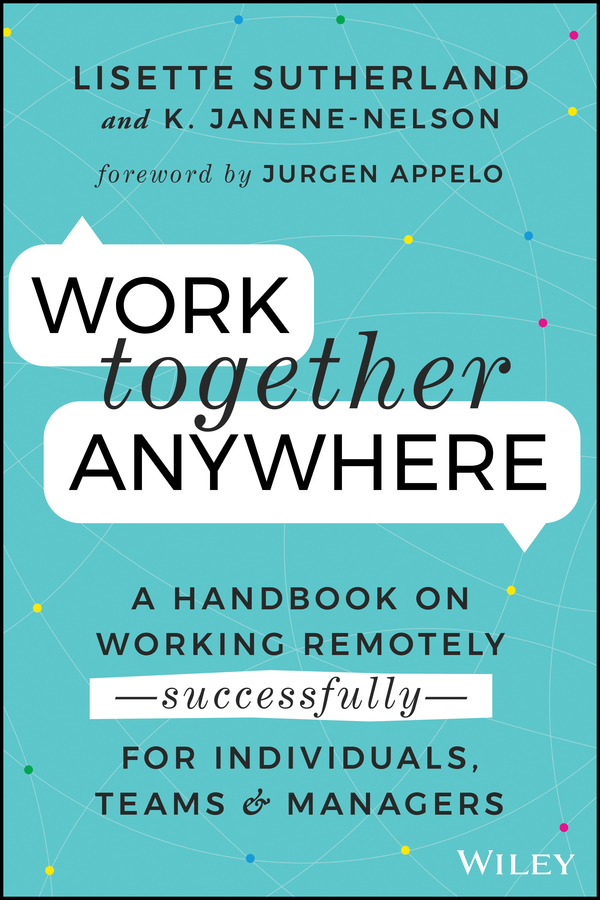
Work Together Anywhere: A Handbook on Working Remotely — Successfully
The most comprehensive practical handbook on distributed teamwork — covering communication norms, virtual meetings, team agreements, tooling, and onboarding. Unlike opinion-driven manifestos, this is a toolbox: checklists, templates, and frameworks teams can apply immediately. Particularly strong on replacing unproductive default meetings with intentional async workflows.
View on Amazon →Meeting Facilitation
These books tackle the meeting problem head-on — why most meetings fail, how to redesign them, and when to eliminate them entirely.

Death by Meeting: A Leadership Fable About Solving the Most Painful Problem in Business
Written as a business fable, this book argues that bad meetings are a leadership failure, not an inevitability. Lencioni introduces a four-meeting framework — daily check-ins, weekly tacticals, monthly strategics, quarterly off-sites — that eliminates the bloated all-purpose meeting most teams default to. The definitive starting point for anyone trying to restructure how their team meets.
View on Amazon →
The Surprising Science of Meetings: How You Can Lead Your Team to Peak Performance
Rogelberg is the world's leading organizational psychologist on meeting science, and this book translates peer-reviewed research into actionable guidance. It covers optimal meeting length, why agendas often backfire, the real cost of unnecessary attendees, and how meeting culture signals broader organizational health. One of the few meeting books grounded in data rather than anecdote.
View on Amazon →
Read This Before Our Next Meeting
A short, pointed book that makes the case for the "Modern Meeting Standard" — the idea that meetings should only exist to support decisions already in progress, not to make decisions by committee. Pittampalli argues that most meetings are a substitute for leadership, and gives a clear protocol for deciding when a meeting is genuinely necessary. Ideal for teams trying to cut meeting volume in half.
View on Amazon →Time Management
Meeting overload is a time management problem as much as a collaboration problem. These books give you the frameworks to protect your most valuable hours.
Deep Work: Rules for Focused Success in a Distracted World
Newport's central argument — that the ability to focus without distraction is the most valuable skill in the knowledge economy — is a direct challenge to always-on meeting and Slack culture. He provides a philosophical framework and four concrete scheduling philosophies for protecting large blocks of uninterrupted work time. A must-read for anyone trying to reclaim the hours lost to low-value synchronous communication.
View on Amazon →
Getting Things Done: The Art of Stress-Free Productivity
The GTD system — capture, clarify, organize, reflect, engage — remains the most widely adopted personal productivity framework in knowledge work. For remote workers who lack the ambient structure of an office, GTD provides a self-imposed system for processing commitments and deciding what actually deserves meeting time versus async handling. The 2015 revision updates the original for digital tools.
View on Amazon →
Make Time: How to Focus on What Matters Every Day
From the creators of Google Ventures' Design Sprint, this book reframes time management as a daily design problem rather than a willpower challenge. Their "Highlight" method — choosing one priority per day to protect — is directly applicable to remote workers who must self-schedule without office structure. More tactical and lighter than Newport, with 87 modular strategies readers can pick based on their specific distractions.
View on Amazon →Where to Start
If you're new to this space and want a single starting point, read Death by Meeting first — it's short, actionable, and directly addresses the most common meeting dysfunction. Follow it with Deep Work to understand what you're protecting when you eliminate unnecessary meetings. If your team is fully remote or heading that way, add Remote and Work Together Anywhere to the list. The rest are worth reading as your practice matures.
For a more data-driven view of how much those meetings are actually costing your organization, run the numbers in our meeting cost calculator — it takes about 30 seconds.